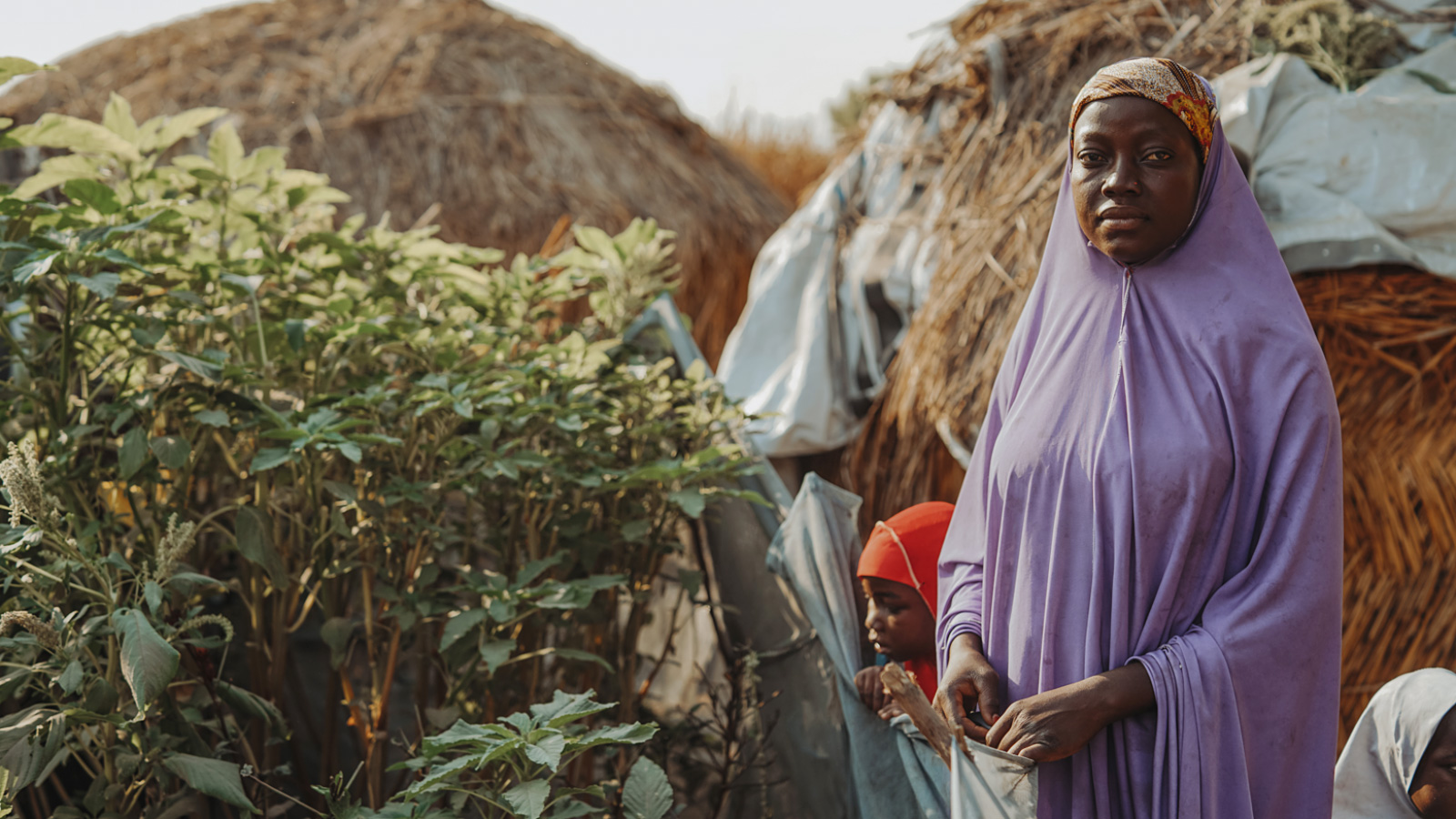

Protection, trauma support and rebuilding close to the front line
Many Ukrainian children now spend long hours in underground bomb shelters, where air-raid sirens, stress and anxiety have replaced a safe childhood. The full-scale invasion has now lasted more than four years and has left deep marks on the civilian population – not least on the children.
When you donate to Ukraine through Mission East, your support goes to Mykolaiv Region, about 50 km from the war zone. Here we build bomb shelters so that schoolchildren can return to the classroom. We provide trauma counselling to children living with the trauma of war, and we help returning war veterans back into everyday life and support them in contributing to the recovery of their own communities.
What we do in Ukraine
Our work in Ukraine is wide-ranging, and every day we work to help the people whose everyday lives have been destroyed by the war. We meet the civilian population with empathy and care where the need and the trauma are greatest.
We focus on the most vulnerable groups. We provide trauma counselling to children traumatised by the war, and we build bomb shelters so they can go to school safely again. We are also establishing a bomb shelter at a district hospital, refurbishing a kindergarten and installing solar panels so that water towers, health clinics and municipal offices keep running through the winter.
At the same time we offer the country’s war veterans trauma therapy and meaningful work. The veterans repair the homes of vulnerable neighbours so families can get through the winter, and they help rebuild their own communities. We are also establishing a veteran centre. All of this is done in close cooperation with our local Ukrainian partners.


What your support has made possible
Behind every figure is a child who can sleep a little more easily, a veteran who has found a new purpose, or a family that got through the winter with a roof over their heads. This is what we have achieved together with our local partners.
Children return to school
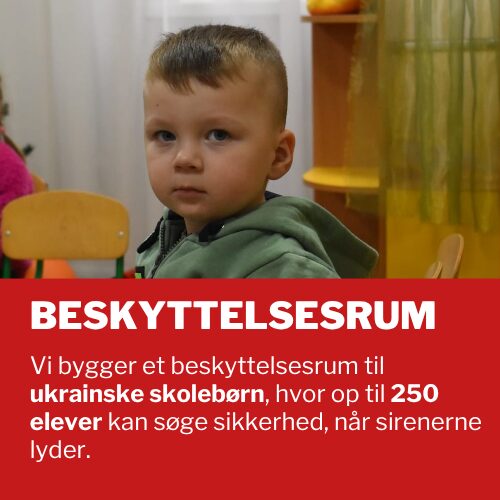
The pupils at Polihon school have not been to school since the war began, because the school had no bomb shelter. We are now building one, and we expect it to be finished before the end of 2026. Up to 250 children will then be able to return to the classroom.
Children get help to process the war
In 2025, 104 children received psychological first aid in safe groups, and 100 children went to well-being camps, where they got a break from sirens and fear. 39 teachers and parents learned how best to support children in distress.
Veterans find a new purpose
In 2025, 20 war veterans received work, physiotherapy and trauma therapy, and 46 veterans and family members received psychosocial support. The veterans repaired homes for 222 vulnerable people and helped build the school’s bomb shelter. 13 out of 14 veterans in the pilot group say the programme has helped them back into an active civilian life.
More veterans can get help
Our local partner has trained 75 Veteran Assistants and other officials in the municipalities of Mykolaiv Region. Each Veteran Assistant helps around 100 veterans a year to find their footing in everyday life.
Ruins become new building materials
Together with NeoEco we are establishing a plant that produces green cement. The cement is made from slag, a residual product from the steel industry, and the rubble is mixed into the cement to make concrete. In 2025, 1,764 people working on reconstruction were introduced to the project, which is still in its early stages.
Ukrainians in the occupied areas get safety advice
In 2025, 17,178 people visited the SaferUkraine campaign site. There they can read, among other things, how to prepare for evacuation, get through the winter without power, give first aid and move safely in mined areas.
Support for Ukraine – give humanitarian aid with Mission East
The war in Ukraine has raged since February 2022 and has had devastating human costs for the civilian population. The rising number of wounded and dead in the Ukraine war is testament to the danger families live with every single day. The situation is serious, and a targeted humanitarian response is essential for the survival of the civilian population and their hope of a better future.
Mission East works to protect the most vulnerable in the war-affected villages of Mykolaiv Region, which is Denmark’s priority area in Ukraine. We make sure that your donation to Ukraine turns into concrete change: bomb shelters and other essential infrastructure, repaired homes and help to process trauma. By combining emergency assistance with the rebuilding of homes and social infrastructure, we lay the foundation for long-term solutions in the communities.
You can make a real difference. Donate now as an individual and send your support to Ukraine as a one-off or monthly gift.
Russian drones and missiles are closing Ukrainian schools
The airspace over Ukraine is marked by a constant threat from missiles and drones. This hits the education system hard, because schools are not allowed to reopen without an approved bomb shelter.
Almost 40 per cent of Ukrainian children currently receive only online teaching or a mix of in-person and distance learning.
In Shevchenkove municipality in Mykolaiv Region, where Mission East works, nine out of twelve schools were damaged or destroyed in 2022.
Most have been repaired, but several still lack a bomb shelter and therefore may not reopen.
More than four years without schooling in Polihon
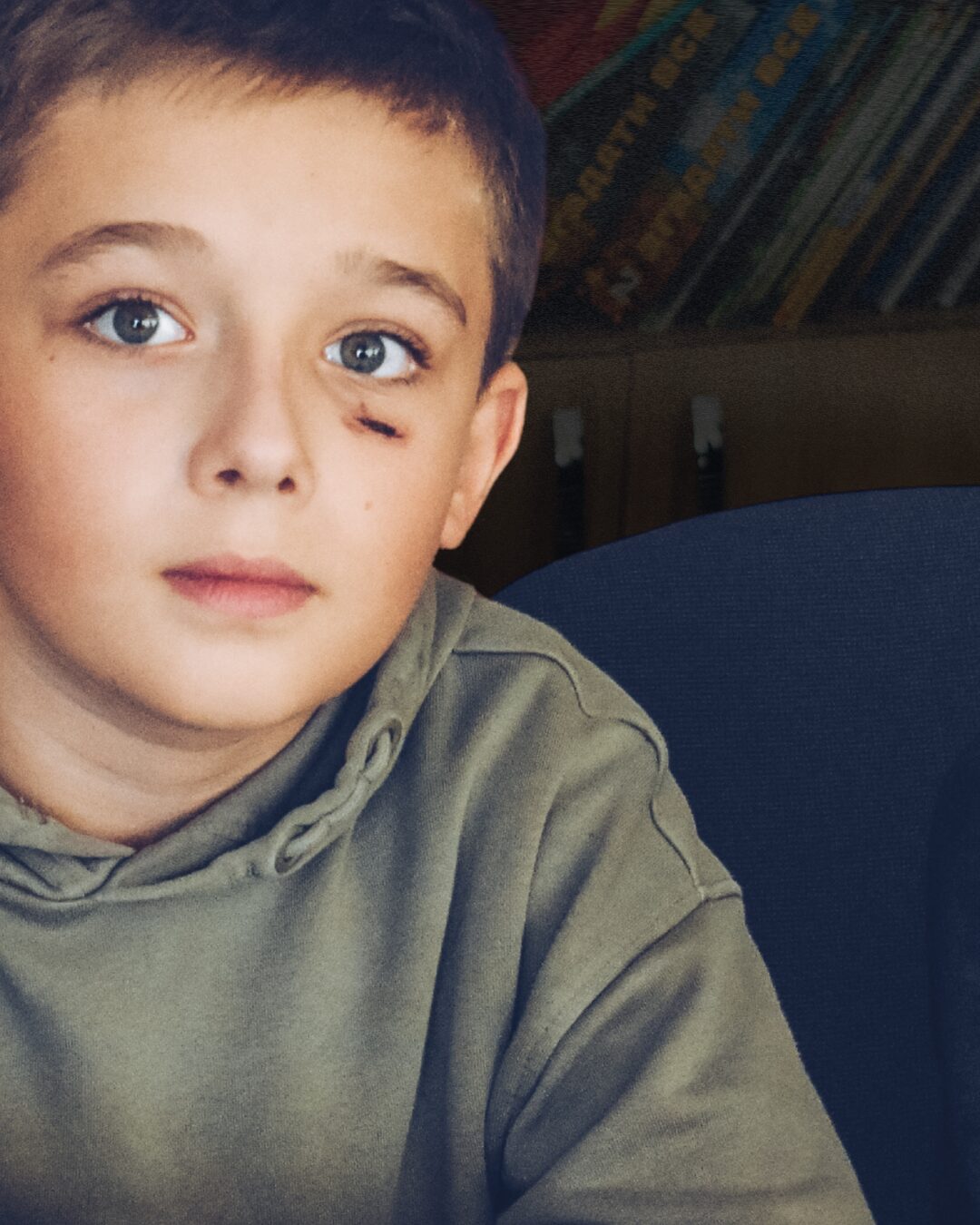
The consequences hit hardest close to the front line, including in the village of Polihon. The children here have had online teaching since the war began, interrupted only by small groups of children who take turns receiving in-person teaching in a bomb shelter beneath the village hall. Like most people in the local area, they have experienced bombardment, armed violence, the risk of unexploded ordnance, cold winters, lost homes, families that have been separated, and the loss of loved ones.
The authorities have repaired the school, and Mission East is helping to build the bomb shelter. We expect it to be finished before the end of 2026. When it is ready, up to 250 pupils can return to their classrooms, friends and teachers. For the mayor of Shevchenkove, bomb shelters for the schools are a top priority. In-person schooling is crucial for the children’s mental health, and the lack of schools is the main obstacle to more families being willing to move back.
Safety is a precondition for learning
“A bomb shelter is not a luxury, it is a neccessity.”
— Teacher at Polihon school
A child cannot take in knowledge when danger is just around the corner. When children cannot attend school in person, a vicious circle begins in which the war quickly becomes all-consuming. Many children miss the community and their classmates. School should be a place where children not only learn but also feel safe. In Ukraine that requires a bomb shelter.
War veterans are building for the children
Oleksandr survived the front in Ukraine. After returning home he threw himself into building an underground bomb shelter so that the school in his home area can welcome its pupils again.
Five years ago he had not imagined that the country’s youngest generation would live without in-person schooling. Today that is the reality for the children in Polihon and in many other places across the country.
Together with five other war veterans and a local building contractor, he is working to build the bomb shelter so that up to 250 pupils can return safely to school.
Read Oleksandr’s own account of the journey from the trenches to the building site in our magazine De glemte (The Forgotten).

Veterans as a driving force for reconstruction
Many Ukrainian veterans return home with severe trauma and physical disabilities and are in urgent need of help to find their way back to civilian life. Mission East invites them into a cash-for-work programme. They work in groups of 3–14 people, which double as support groups. The groups are connected to a psychologist who is a veteran himself and can be contacted around the clock. The veterans also receive physiotherapy as needed at a specialised clinic.
The programme also includes social activities for the whole family, where both spouses and children can support one another. This gives the veterans new routines, purpose and community, strengthens families and helps prevent gender-based violence.
The veterans use their skills directly to help vulnerable neighbours before winter sets in. Among other things, they help with:
- replacing damaged roofs, gutters, doors and windows
- repairing sewage systems and clearing rubble
- restoring the water supply
In 2025, 20 veterans received work and physiotherapy through the programme, and 46 veterans and family members received psychosocial support. They repaired homes for 222 vulnerable people.
HWO IT WORKS
14 veterans from the pilot group have assessed the programme:
13 out of 14 say it has helped them, or helped them a great deal, back into an active civilian life.
The share who feel emotionally well has risen from 29% to 57%.
More than half had found a job or received a job offer.
We are strengthening support for veterans across the region
In 2025, Mission East signed a cooperation agreement with the veterans department of the regional authorities in Mykolaiv. Since then our local partner has trained a total of 75 “Veteran Assistants”, who are employed by the municipalities, and other officials. Each Veteran Assistant helps around 100 veterans a year to find their footing in everyday life.
We have also launched “Veteran village talks”, where veterans speak about their experiences and our veteran therapist draws attention to the challenges of coming home. The events now take place once a month across the region’s 922 villages, which are visited in turn. In addition, the launch of veteran Wilhelm Vityuk’s book “A captive’s diary” reached 120 participants.
The Danish Peace and Stabilisation Fund is also financing a major new veteran project, which we are carrying out together with Disabled Peoples Organisations Denmark (DPOD).
See also: Closely connected: Ukrainian and Danish veterans meet about life after the war (article in Danish)
What happens now in Ukraine?
The challenges are many. Many veterans return from the front with severe disabilities, and although services exist for them, this group often has very particular needs. It requires new legislation, targeted measures and larger budgets – and fortunately there is a strong focus on this in Ukraine. Veterans are not merely survivors. With the right support they can play a key role in rebuilding their communities and the country’s future.
Read more about the current situation in our travel report from a visit to Ukraine (article in Danish).
Children like Anna live in bomb shelters
A great many Ukrainian children are deeply traumatised by the war. The sirens go off almost every night, in the middle of their sleep. You then have a few minutes to get down into a bomb shelter with only the most important things you own – if you are lucky enough to have one nearby.
For many children the bomb shelter has become a second home.
For 11-year-old Anna this is reality. She lives in Mykolaiv. When the sirens sound, she runs down to the basement. Her heart beats fast and the air feels heavy. She is slightly claustrophobic, so it is hard for her to be down there.
Anna is one of the many children who have remained in Ukraine. Every week children like her spend long hours underground.
Psychological first aid restores children’s well-being and learning
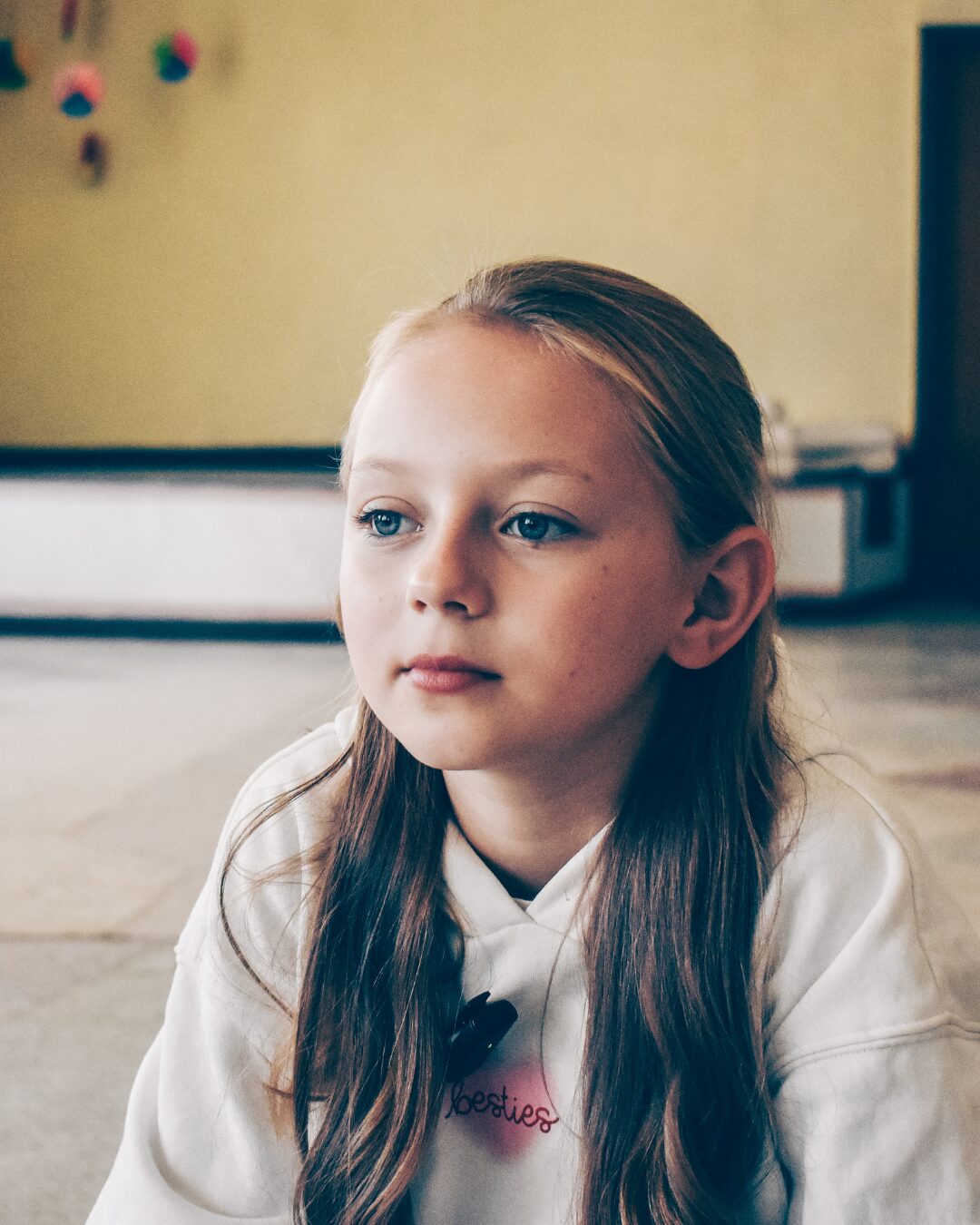
Prolonged trauma from drone attacks and explosions risks leaving lasting marks on children’s mental health and development. Without targeted help, an entire generation risks losing both a safe childhood and a stable future.
That is why Mission East and our local partner Bilozerka provided psychosocial support to the pupils at Polihon school, so they are ready when the school opens again. The children met in groups every week for 45 minutes to one and a half hours of trauma counselling. The course ran for 25–28 weeks and ended in May 2026. In 2025, 104 children received support and trauma counselling, and 39 teachers and parents learned how best to help children in distress.
In 2027 Mission East will start the same project at a new school. If we can raise the funds, we would like to expand the service so that even more children can get help.
Well-being camps give children a breathing space
In 2025, 100 children went to well-being camps, where they got a break from the war and strengthened their mental health.
Rubble becomes green cement
In the villages of Mykolaiv Region, Mission East and our partners deconstructed destroyed infrastructure in 2023 and 2024, including bombed schools. The rubble is sorted and reused so that as little as possible goes to waste. This protects the climate and the local environment and makes it possible to reduce the cost of rebuilding.
Together with our partner NeoEco we are establishing a pilot plant for low-carbon cement and green concrete, financed by Danida Green Business Partnerships. The plant will demonstrate to local authorities, donors, NGOs and the private sector that green building materials are a realistic choice in the reconstruction of Ukraine.
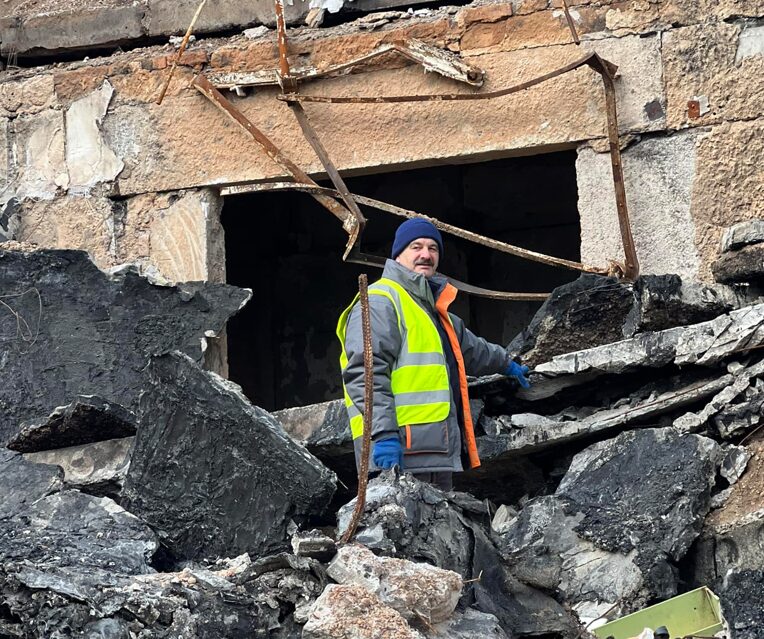
In 2025 alone, 1,764 people working on reconstruction were introduced to the option of producing low-carbon cement and green concrete.
The work builds on thorough groundwork. Together with the Danish architecture firm Lendager and the Ukrainian coalition of architects Ro3kvit, we examined which materials and solutions are suited to circular construction.
The AI specialist UA Damage used satellite images and drone footage to map the destruction and the volume of rubble across 70 villages in Mykolaiv Region. An international asbestos expert advised on the safe handling of demolition waste.
New technology makes reconstruction safer
Unexploded ordnance in the rubble is a life-threatening risk. Together with UA Damage, Mission East has tested a camera system using artificial intelligence that detects unexploded ordnance in rubble piles, and technology that finds sub-surface mines.
Together with the State Emergency Service (SESU) in Mykolaiv we have also piloted AI drones that can quickly locate unexploded ordnance after attacks, for example on energy infrastructure.
Emergency help when infrastructure is hit
Russian attacks often hit power, water and health services. In 2025 Mission East distributed 147 power banks to vulnerable people in areas with power shortages, financed by our own fundraising. In 2026 we have just begun:
- refurbishing a kindergarten in Shevchenkove municipality. It has room for 300 children.
- preparing the basement of a hospital in Snihurivska municipality for use as a bomb shelter with room for 500 people. The hospital treats 35,000 patients a year.
- installing solar panels in Zavodska municipality so that water towers, a health clinic and a municipal office can run during power cuts. This helps an estimated 5,000 people.
We implement these three activities ourselves, and they are financed by the Danish Ministry of Foreign Affairs.
Safety advice for Ukrainians in the occupied areas
Since 2022 Mission East has run an awareness campaign on social media with safety advice for Ukrainians, particularly in the occupied areas. The campaign is called Bezpechna Ukraina (SaferUkraine), and Dorcas and Wodan International helped produce the material. In 2025, 17,178 people visited the campaign site.
Our path in Ukraine
When Russia launched the full-scale invasion in February 2022, we immediately began to help. Together with partners such as Medair, Hungarian Baptist Aid and Transcarpathian Baptist Charity Foundation, we distributed food and hygiene items to people fleeing, provided crisis support at the border crossings, sent equipment to hospitals and repaired war-damaged homes before winter.
In 2023 we opened an office in Mykolaiv Region and shifted our focus from emergency relief to reconstruction. Together with Danish and Ukrainian experts we mapped the destruction across 70 villages and tested new technology using artificial intelligence that can find unexploded ordnance in rubble. That work is today the foundation for both the green reconstruction and our work with veterans and children.
Partners and donors
We work closely with local authorities and partners in Mykolaiv Region, including Bilozerka and NeoEco. In 2026 we also began cooperating with Legal Development Network, Perspektiva and Disabled Peoples Organisations Denmark (DPOD) and their local partners.
The work is supported by Danida, including Danida Green Business Partnerships, and the Danish Peace and Stabilisation Fund, as well as by private donors, churches and foundations.
Accountability, quality and humanitarian experience
For 35 years Mission East has stood in the middle of crises alongside people who have lost everything to war and disaster. In Ukraine we work hand in hand with the local population so that they become more resilient and can look to the future with confidence. Our work is about helping those others forget. We believe in the power of hope, in inclusion and in rights for all.
Our work is carried by thousands of private donors, churches and foundations and by close partnerships with the EU, the UN and the Danish and German governments, among others. To take the best possible care of those we help, and to make sure your support lands in the right place, our work always follows the strictest international standards for humanitarian work.
We are certified against the Core Humanitarian Standard (CHS) and are a member of the CHS Alliance. Mission East also follows the Red Cross Code of Conduct and the Sphere standards.
We are also present in some of the world’s most overlooked crises, including Sudan and Nepal, and in some of the most war-affected areas such as Lebanon and Syria.
News from Ukraine
Here you can follow our work and come closer to some of the people we help in Ukraine – both the difficult stories from everyday life and the stories of hope and reconstruction that you rarely hear in the news.
Mission East in collaboration with UADamage and Neo-Eco Ukraine held a large-scale conference in Kyiv on the topic of "Damage Assessment of [...]
We had a productive and future-oriented meeting at the Danish Embassy in Kyiv with Ambassador Ole Egberg Mikkelsen, Minister Counsellor Henr [...]
- I'm delighted to announce that Mission East has established an office as one of the first relief organisations in Mykolaiv. The region fac [...]


Frequently asked questions about our work in Ukraine
Where in Ukraine does Mission East work?
We work mainly in the villages of Mykolaiv Region in southern Ukraine, about 50 km from the war zone. This is Denmark’s priority area in Ukraine. We have had an office in the region since 2023.
How close to the front line does Mission East deliver humanitarian aid?
Our projects are located in Mykolaiv Region, about 50 km from the war zone. The area is still hit by missile and drone attacks.
How does Mission East ensure that humanitarian aid in Ukraine is sustainable?
We work closely with local partners, authorities and organisations that know the needs of the area from the inside. This local anchoring strengthens civil society’s own capacity to help, both now and in future crises.
Which international quality standards does Mission East follow in Ukraine?
Mission East is CHS-certified by HQAI, which documents that our work meets the Core Humanitarian Standard for quality and accountability. We also follow the Red Cross Code of Conduct and the Sphere standards.
Can I get a tax deduction for my donation to Ukraine?
Yes, you can get a tax deduction for your donations to Mission East under section 8 A of the Danish Tax Assessment Act. If you provide your Danish civil registration number (CPR), we automatically report the amount to the Danish tax authorities, so the deduction appears on your annual tax statement.
How do you ensure that the money reaches the right place?
We make sure the money is used correctly through independent external audits, close follow-up with our local partners and compliance with international standards. As a CHS-certified organisation we are reviewed on an ongoing basis by the independent certification body HQAI.