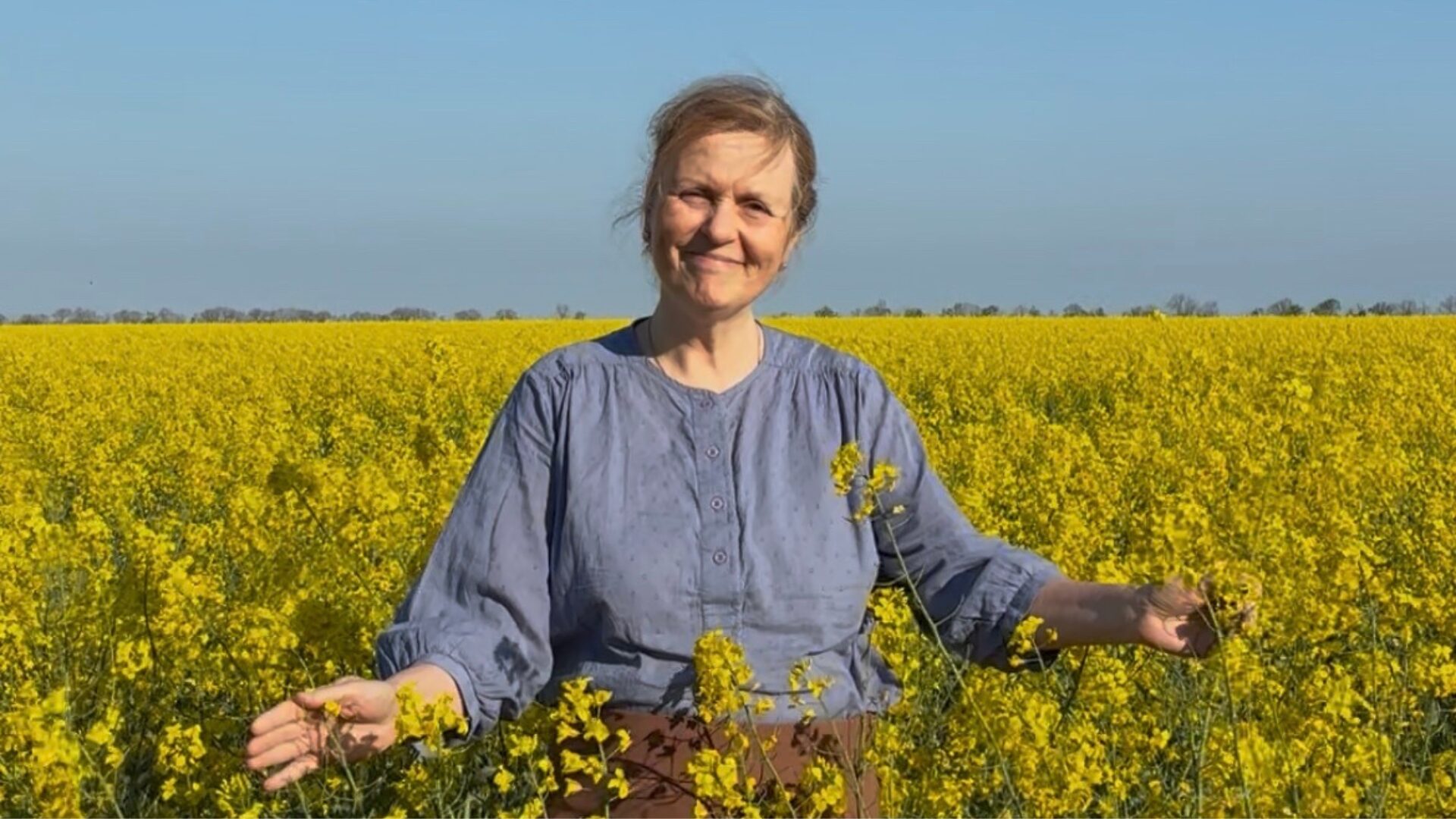
From the front lines of the reconstruction work in Ukraine, Betina Gollander-Jensen, Secretary General of Mission East, shares her reflections from her latest visit to the region.
In southern Ukraine, I hear the same words repeatedly when I meet war veterans: “The person I used to be is lost forever.”
It is deeply disturbing to hear. If the person they used to be is gone, who is standing before me now? And what future is possible when one’s sense of self has been fundamentally altered by the war?
In the Mykolaiv region, where Mission East focuses our work, these questions are not abstract. They are living realities.
Rebuilding a sense of purpose – one bomb shelter at a time
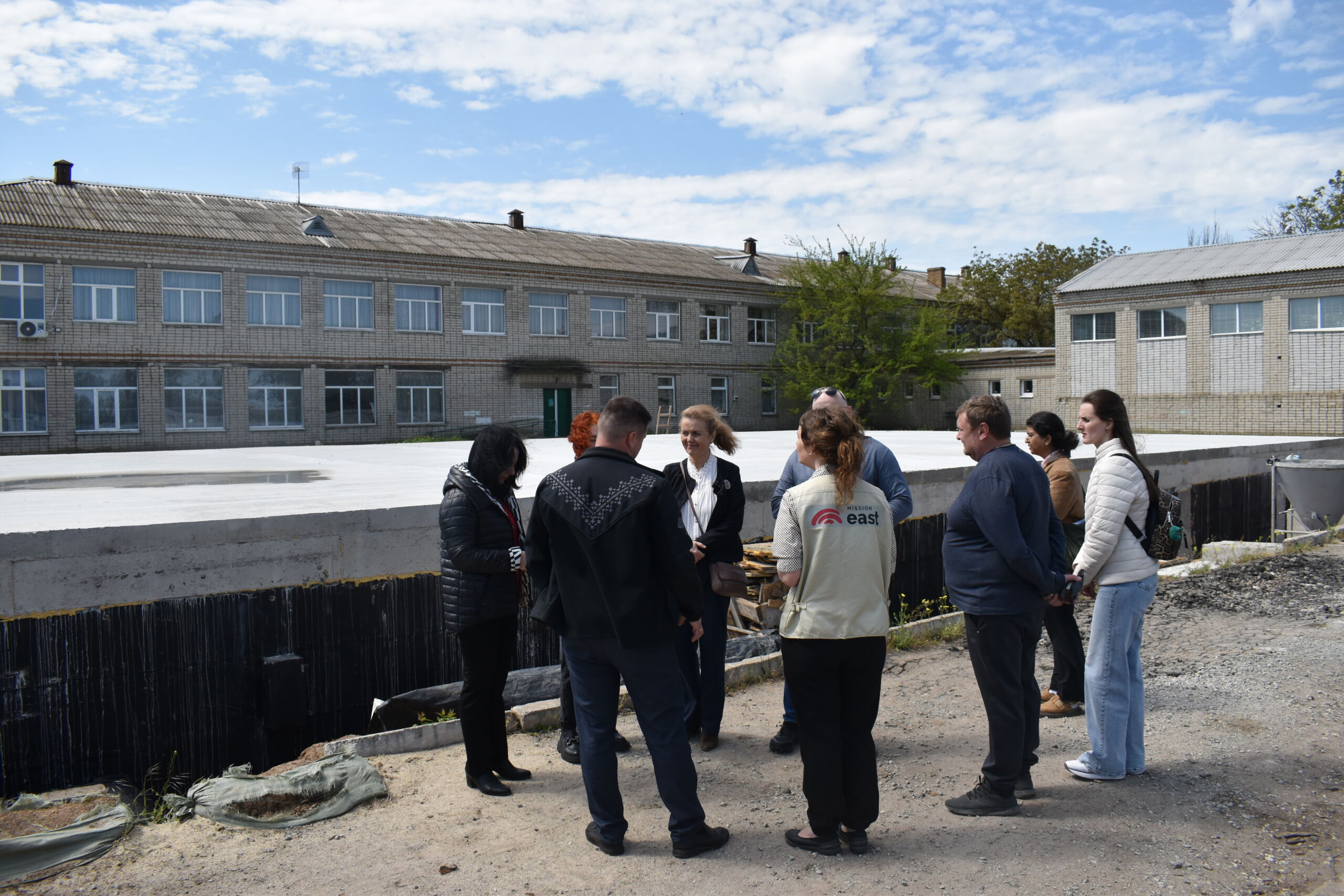
At the school in the village of Polihon in the municipality of Shevchenkove, I met a group of veterans working side by side. Their military uniforms and weapons have been replaced by high-visibility vests, helmets, and construction tools. Together, they are building a shelter that will enable 250 children to return safely to school despite the ongoing threat of air strikes.
There is a quiet sense of camaraderie among the veterans. This is more than just a construction site. It is a workplace that provides a sense of community, routine and purpose – qualities that many former soldiers lost when they left the battlefield.
Through Mission East’s so-called cash-for-work activities, a kind of wage subsidy, the veterans not only earn an income; they also rebuild their connection to the labor market, their local communities and to one another. Step by step, they rebuild their broken bodies and minds.
A generation of children left in limbo
In Shevchenkova, nine out of 12 schools have been damaged or destroyed. For years, the children have been entirely reliant on online learning – not only because of the damages, but because schools must have bomb shelters in place before it is both safe and legal to reopen.
It is hard not to draw parallels to the COVID-19 lockdowns, when many of us struggled to keep our children engaged with school lessons via screens for just a few weeks or months. Here, families have endured online schooling throughout both the COVID-19 pandemic and since the start of the war – whilst facing bombardments, displacement and loss.
Children in the area have experienced intense violence, harsh winters, separation from perhaps a father or mother, and the constant risk of both drone strikes and landmines. This has had a profound impact on their mental health, as the children live in constant danger and are acutely aware of the risks in their local area.
That is why Mission East, together with local partners, provides psychological counselling and group therapy to help the children prepare to return to the classroom and cope with their war trauma – not only physically, but also emotionally.
From survivor to support person
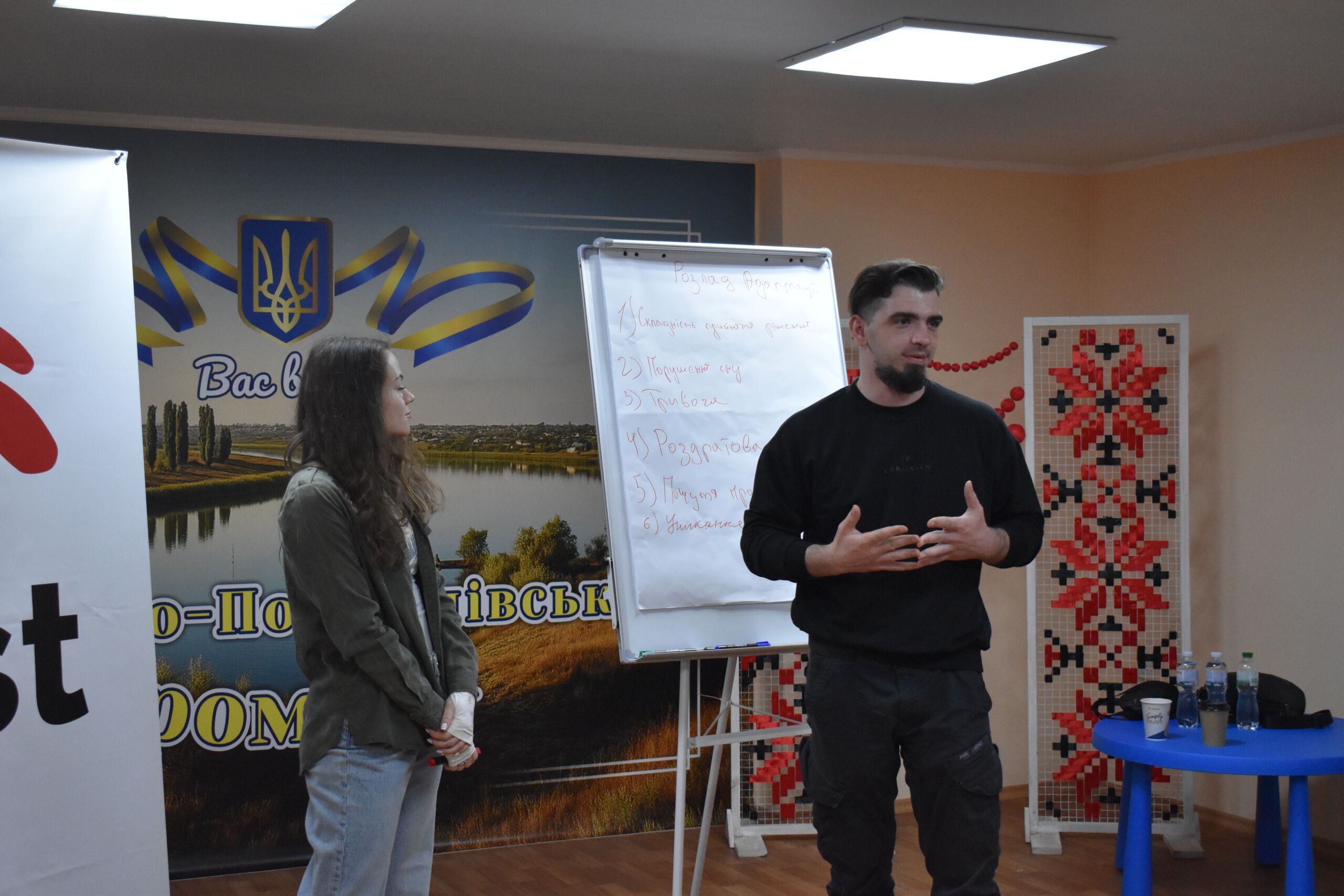
I met Wilhelm Vityuk, a 24-year-old psychotherapist who was leading a workshop for around 15 veterans and their families. His presence commands attention – not only because of his training, but also because of his own background as a war veteran.
In 2022, Wilhelm was a soldier defending Mariupol during the three-month Russian siege. There, Wilhelm and a group of fellow soldiers were taken prisoner and held in a Russian prison for a whole year. For 12 months, Wilhelm endured physical and psychological torture, which left deep scars on the young man, who was just 20 at the time.
After his release, he began writing about his experiences to process his trauma. He then trained as a therapist. Today, he helps other veterans find their own path to recovery.
Unfortunately, his story is not unusual. Many Ukrainian soldiers will return home to civilian life and will need help finding their way back to a normal existence and a new sense of purpose. This is where the voluntary network, in which veterans help one another, plays a crucial role.

A growing national challenge
Around one million Ukrainians – approximately three percent of the population – now consider themselves war veterans. This figure, including family members, could reach five to six million people.
In the Mykolaiv region alone, up to 150,000 war veterans are expected to settle.
The consequences are enormous. Many returning veterans live with trauma, disabilities, and a sense of having been let down. They often face huge challenges in returning to the labor market and obtaining the necessary support from the health service. Capacity is simply insufficient to meet the veterans’ extensive needs.
In September 2025, at least 130,000 veterans were officially registered as having a disability. The actual figure is likely to be higher. In the Mykolaiv region, local authorities have registered around 1,000 veterans with disabilities – and the number is rising as the war continues.
Without adequate support for veterans, experience shows that they often face family problems, alcohol abuse, and social isolation.
Rehabilitation is essential
Helping veterans return to civilian life is not merely a humanitarian priority – it is crucial to Ukraine’s long-term reconstruction.
The reintegration of veterans is not merely a matter of the individual’s well-being. The path back to civilian life is a journey that each veteran must undertake to learn to live with both the psychological and physical wounds, from PTSD to missing limbs. But it is also a journey for veterans’ families, their local communities and Ukraine as a whole.
Mission East therefore works to support the transition to civilian life by providing physical rehabilitation and therapy directly to veterans and training local authority veteran social workers so they can better provide support and advice to veterans.
This could be through local job schemes, where groups of veterans repair homes damaged by war and build shelters. Or it could be through the local advisers trained by Mission East.
What happens next?
The challenges are many. Many veterans return home with a disability and can access the support available in this area. However, veterans also have specific needs that often require new legislation, new initiatives and new budgets – something that, fortunately, Ukraine already has in place. Veterans are not merely survivors of the war. They are vital to the reconstruction of their local communities, and with the right support, they can play a crucial role in Ukraine’s reconstruction.