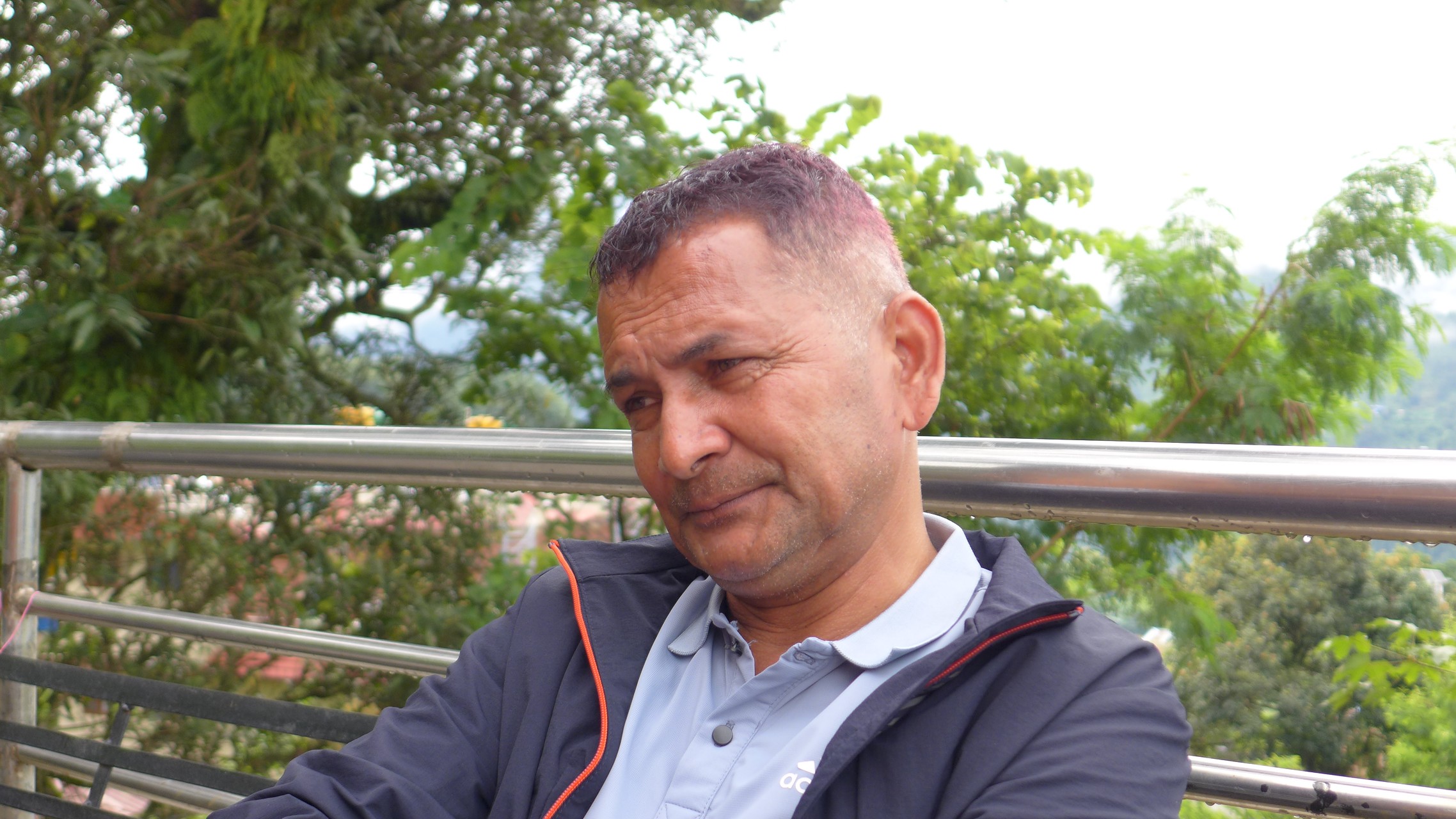
Ramhari Acharya lost his wife, his home and his workplace when a wall of water tore through the valley in northern Nepal. Even so, he turned back and waded into the water again and again. So did his 13-year-old son.
As told to Peter Drummond Smith, edited by Sara Elisabeth Nedergaard/Mission East
He ran twice that morning.
The first time was when the warnings sounded outside the municipality office in Uttargaya. The second was when he and his colleagues realized that the wall of water coming down the valley was far higher than anyone had imagined.
And once he was safe, Ramhari Acharya turned around and walked back towards the water.
Again and again, the 52-year-old civil servant waded into the torrent and dragged people onto dry land who would otherwise have been swept away. He managed to save around 20.
He did not yet know that his wife was not among those who got out.
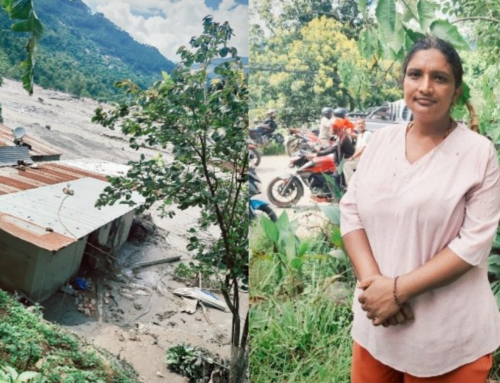
On 26 August 2026, part of a Himalayan glacier collapsed near the border between Nepal and China. The collapse triggered a landslide that dammed a river – and when the natural dam burst, it sent a wall of water, ice and rock down the Trishuli valley. According to the Nepali authorities, at least 1,386 people are confirmed dead and more than 5,100 are still missing (figures as of 12 September).
Ramhari Acharya is ward secretary for Ward 5 in Uttargaya Rural Municipality in Rasuwa district. That makes him the most senior civil servant at the most local level of Nepal's government – the person people turn to when something goes wrong. He had only just returned to work after an operation on his arm and a month of recovery at home when the flood came.
The office he escaped from no longer exists. The Uttargaya municipality building is among the public buildings that were washed away entirely. So is his own house – and everything his family owned.
She went back for her mobile phone
Ramhari's wife made it out of the house. But as the water closed in, she ran back inside for her phone. Both she and the house were swept away by the current.
He searched for her for three days. Eighteen days after the disaster, he still has not been able to hold a funeral, because her body has never been found.
"I have given up hope of finding her. I know she must be dead," he says.
Instead, he has thrown everything into his work as a local official: finding shelter for those who have lost their homes, and making sure the survivors have what they need to stay alive. The couple has two sons – one aged 13 and one young adult. Both survived.
As he speaks, tears well up in his eyes. He said that it's hard to take in a tragedy of this size; not just his own, but that of everyone he knows and works with. He also said that he doesn't want to be overwhelmed and give up in the middle of all this but must keep going.
His 13-year-old son pulled four classmates from the water
Ramhari's 13-year-old son also escaped the flood on his own. But he did not stop there. The boy pulled four of his schoolmates out of the water and has since been celebrated in the Nepali press for his courage.
As the water retreated, the young boy believed both his parents were dead. Ramhari searched desperately for four hours before father and son found each other again.
After four days together, Ramhari decided to send his son away from the devastated area – to stay with his own brother and the boy's cousins, far from the flood-hit surroundings.
A community with no power, food or shelter
The first days after the disaster were chaotic for the whole community.
"There was no electricity. And almost everyone here is cooking with electricity. Even the families who had not been hit by the water could not help feeding the survivors," Ramhari says.
Power has since returned – but went out again for 12 hours after a storm the night before this interview.
Together with the local government, Ramhari has coordinated food, bedding, clothes, and cooking utensils for displaced families, with donations from both local and international organizations. A school in the area has been turned into a holding center, but it is already full. Ramhari hopes families from neighboring Ward 4 can return home soon, freeing up space for the rest – and allowing classes to resume.
In the medium term – until people can build temporary or new houses – he is working on several tracks at once: holding centers, public buildings and rented rooms. Some families will probably leave the area altogether. Others may be able to rent a room from someone else, if they have the cash to do so.
"Nobody should have to sleep outside. That is my priority," he says.
When a body is never found, the system breaks down
Ramhari points out that the current rules and guidelines were not designed for disasters on this scale.
"We are not allowed to buy land to resettle the families who have lost their homes, for example. And when the body has not been found, the relatives cannot be issued a death certificate. That means they can neither claim the insurance nor access the bank account of the deceased," he says.
That applies to his own family, too.